STIMULUS: Shining a light on the smallest blood vessels

The STIMULUS project is developing novel light-based technology to investigate the function of the microcirculation, the network of tiny blood vessels that connects the larger vessels to tissues throughout the body. By measuring the microcirculation and the larger vessels simultaneously, the project aims to uncover biomarkers that could support earlier detection of cardiovascular disease.
Today, many technologies used to assess vascular health focus on the larger blood vessels. However, some of the earliest changes associated with cardiovascular disease may occur in the microcirculation. The problem is that these vessels are extremely small. Conventional imaging technologies such as ultrasound cannot effectively capture how the microcirculation is performing.
STIMULUS is addressing this gap with a different approach: using light.
Measuring circulation with multiple wavelengths
At the core of STIMULUS are multi-wavelength optical devices designed to measure both microcirculation and macrocirculation—the circulation through the larger blood vessels—simultaneously.
The technology uses light at different wavelengths to investigate what is happening within the circulation beneath the skin. By analysing how light interacts with tissue and blood, the system can extract information related to vascular function.
This requires more than simply shining a light on the skin. The STIMULUS team is developing new hardware alongside data-analysis techniques that can turn optical measurements into meaningful biomarkers of vascular function.
The project is also exploring measurements at different transmural pressures—the pressure difference across the wall of a blood vessel. Combining different wavelengths and pressure conditions could provide new information about how the vascular system is functioning.
No existing technology currently combines these capabilities in the same way.
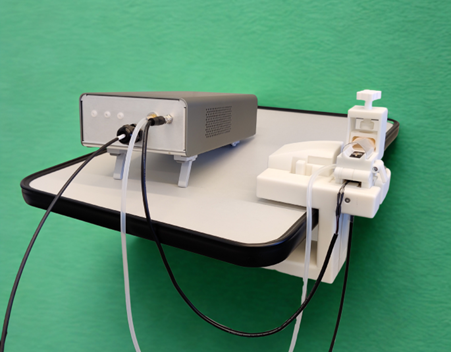
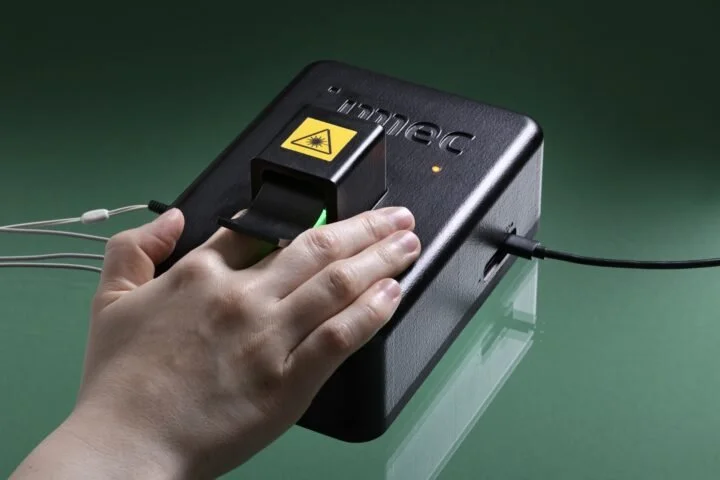
Multi-spectral optical sensory system HEMI (left) and speckle plethysmography (SPG) system (right). For details on the technology, visit STIMULUS website
From optical signals to digital biomarkers
The ultimate goal is not merely to produce new measurements, but to identify biomarkers that reveal changes in vascular function.
A biomarker is a measurable characteristic that provides information about a biological process or a person's health. The STIMULUS team is investigating whether patterns in the microcirculation can serve as useful indicators of cardiovascular disease.
This could be particularly important, as changes in the microcirculation may appear before more obvious signs of disease become detectable.
If the technology can reliably identify these changes, it could enable earlier diagnosis and monitoring of cardiovascular conditions.
From prototypes to clinical trials
STIMULUS has already reached an important milestone: its prototypes have matured sufficiently to be used in clinical trials.
The project is now testing the technology in patients with chronic kidney disease at INSERM in Paris. The team has also tested the technology on healthy volunteers. These studies have shown that the system can identify biomarkers associated with changes in circulation.
An important next step is to determine how well these measurements translate into meaningful disease indicators in clinical populations.
Solving the “green gap”
Developing a multi-wavelength optical system also comes with some very practical engineering challenges.
One of the biggest has been what the STIMULUS team calls the “green gap”: the difficulty of obtaining lasers at certain wavelengths needed for the technology. Rather than allowing this limitation to stop development, the team has had to find alternative ways to work around the availability of these specific laser colours.
This illustrates one of the challenges of developing entirely new measurement technologies: sometimes innovation involves not only creating new capabilities, but also solving limitations in the components needed to make them possible.
Towards earlier diagnosis
STIMULUS is currently at Technology Readiness Level 5 (TRL 5), meaning that the technology has reached a level of maturity where it can be tested in a relevant environment.
The clinical trials now underway will be an important step in determining whether the technology can measure the state of the microvasculature and identify clinically relevant biomarkers.
If successful, STIMULUS could contribute to a shift towards earlier detection of cardiovascular disease. Instead of focusing only on changes that can already be observed in larger vessels, clinicians could potentially gain access to information from the body's smallest blood vessels.
The potential applications extend beyond a single disease. The project is investigating its technology in chronic kidney disease and heart failure, while the underlying approach could ultimately be relevant to a broader range of cardiovascular conditions.
For now, the STIMULUS team continues to test its technology in clinical settings. By shining new light on the microcirculation, the project is exploring whether the smallest blood vessels could provide some of the earliest clues about cardiovascular health.
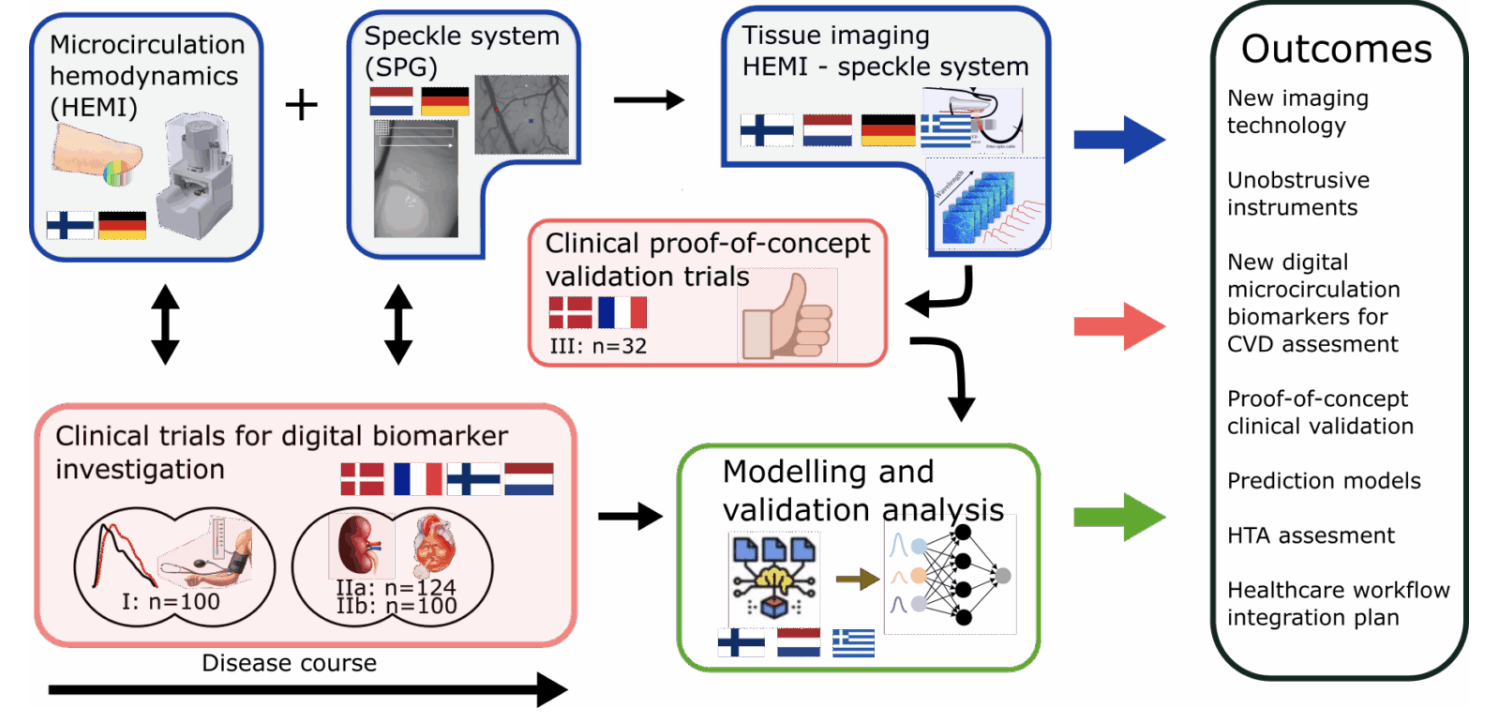
Overview of STIMULUS main activities and outcomes.
