IV-Lab: Bringing the clinical laboratory inside the blood vessel
Cardiovascular diseases remain the leading cause of death worldwide, yet most patients are monitored through occasional check-ups that provide only a static snapshot of their condition. For people living with chronic heart failure, important physiological changes can develop between appointments, potentially leading to avoidable complications and hospitalisations.
The project IV-Lab (In-Vessel Lab-on-a-Chip for Advanced Monitoring of Cardiovascular Diseases) is tackling this challenge by developing a microscopic implantable device capable of continuously monitoring multiple physiological parameters within a blood vessel. Supported by the EIC Pathfinder programme, the project aims to create a new generation of implantable sensors that could transform how cardiovascular diseases are monitored and managed.
Moving beyond single-parameter monitoring
Current implantable cardiovascular monitoring systems typically focus on a single measurement, usually blood pressure. While valuable, these devices can only provide part of the clinical picture.
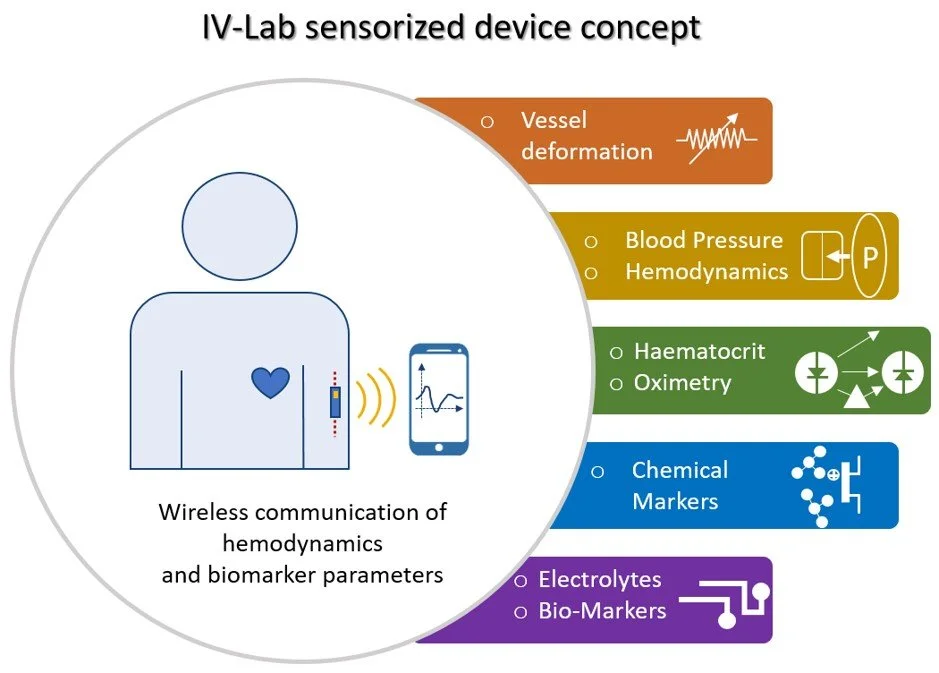
The IV-Lab consortium follows a way more ambitious vision: a miniature in-vessel platform capable of measuring mechanical and biochemical signals simultaneously within the vascular environment. By combining multiple sensing technologies into a single implantable device, clinicians could gain a richer, more comprehensive understanding of a patient's cardiovascular status.
This approach has the potential to support earlier interventions, more personalised treatments, and improved long-term disease management.
A Lab-on-a-Chip inside the vascular system
At the heart of IV-Lab is a miniaturised multisensor platform mounted on a stent-like support structure, which can be implanted directly within a blood vessel.
The device integrates several advanced technologies:
Mechanical sensors for pressure and strain monitoring
Optical sensing systems based on LED and photodiode components
Electrochemical sensors for detecting ions and biomarkers
Flexible microelectronics for signal processing
Wireless power transfer and communication systems
Advanced biocompatible coatings and encapsulation materials
Microfabrication and 3D micro-printing technologies
While many of these technologies already exist individually, integrating them into a single implantable platform represents a major engineering challenge. The real innovation lies in the ability to integrate multiple sensing modalities, electronics, wireless communication, and protective packaging into a device small enough to operate safely within blood vessels.
How the technology works
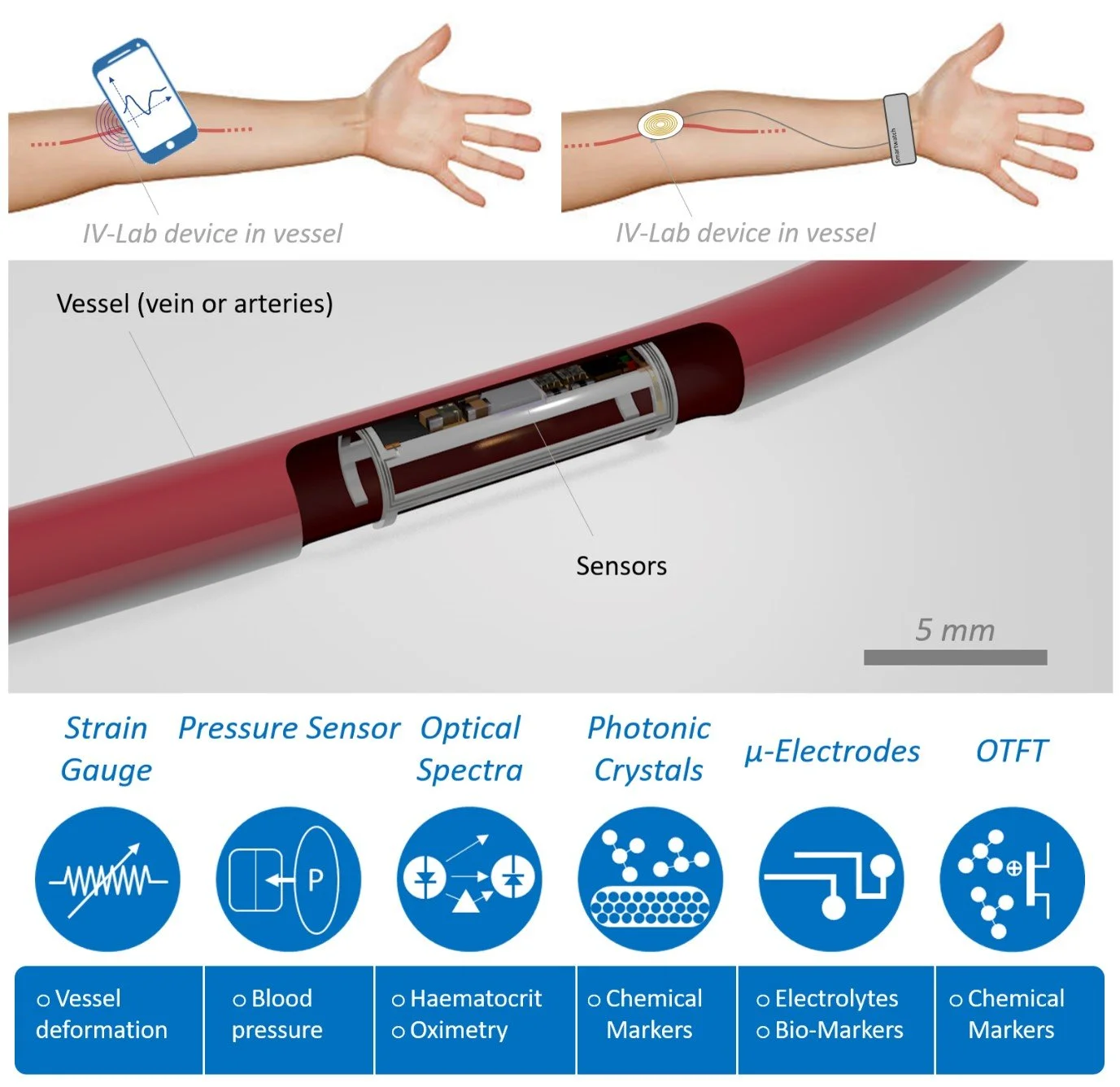
Representative image of the IV-LAB concept
The IV-Lab system follows a straightforward but highly sophisticated workflow:
The device is implanted inside a blood vessel using minimally invasive techniques.
Multiple integrated sensors continuously measure physiological and biochemical parameters.
On-board electronics collect and process the sensor signals.
Data and power are exchanged wirelessly through an external interface.
Information can be transmitted to external devices for monitoring and future clinical decision support.
The long-term vision is a system that operates autonomously, requiring little or no action from patients while continuously providing clinically relevant information to healthcare professionals.
Engineering at the limits of miniaturisation
Developing an implantable multisensor platform presents several technical challenges.
The device must operate reliably inside a demanding biological environment while remaining extremely small. Different sensor technologies often require different materials, fabrication processes, and operating conditions. Bringing them together into a single platform without compromising performance is one of the project's most complex tasks.
Another challenge is ensuring long-term stability. The system must withstand continuous exposure to bodily fluids while maintaining accurate measurements and reliable wireless communication.
Despite these difficulties, the consortium has already demonstrated important technical milestones in the short time since it was launched in 2023.
Progress towards an integrated implant
The project has successfully created early integrated prototypes that meet size constraints and incorporate electronics, pressure sensors, and advanced encapsulation.
Key accomplishments include developing electronic prototypes within target size constraints, validating strain-sensing concepts, demonstrating ultrathin capacitive pressure sensors, successfully transferring these sensors onto electronic substrates, and advancing electrochemical sensors for ions and biomarkers. Additionally, optical sensing using microfabricated LED-photodiode systems has been demonstrated, and a dedicated ex vivo vessel perfusion platform operating under physiologically relevant pulsatile conditions has been validated.
These achievements lay a solid groundwork for the next stage of system integration and testing.
Towards Continuous Cardiovascular Care
The project is currently targeting Technology Readiness Level (TRL) 3–4 for its integrated multisensory implantable platform.
If successful, IV-Lab could help shift cardiovascular care from periodic assessment to continuous monitoring. Instead of reacting to symptoms after they appear, clinicians could potentially detect physiological changes much earlier and intervene before serious complications develop. And even beyond heart failure, the platform's flexible architecture could eventually support a wider range of cardiovascular monitoring applications.
With cardiovascular diseases continuing to place a significant burden on patients and healthcare systems across Europe, IV-Lab demonstrates how advances in microsensors, electronics, materials science, and wireless technologies can converge to create entirely new approaches to patient care. By bringing laboratory-grade sensing capabilities directly into the vascular system, the project is laying the groundwork for a future in which cardiovascular health can be continuously monitored, unobtrusively, and with unprecedented detail.
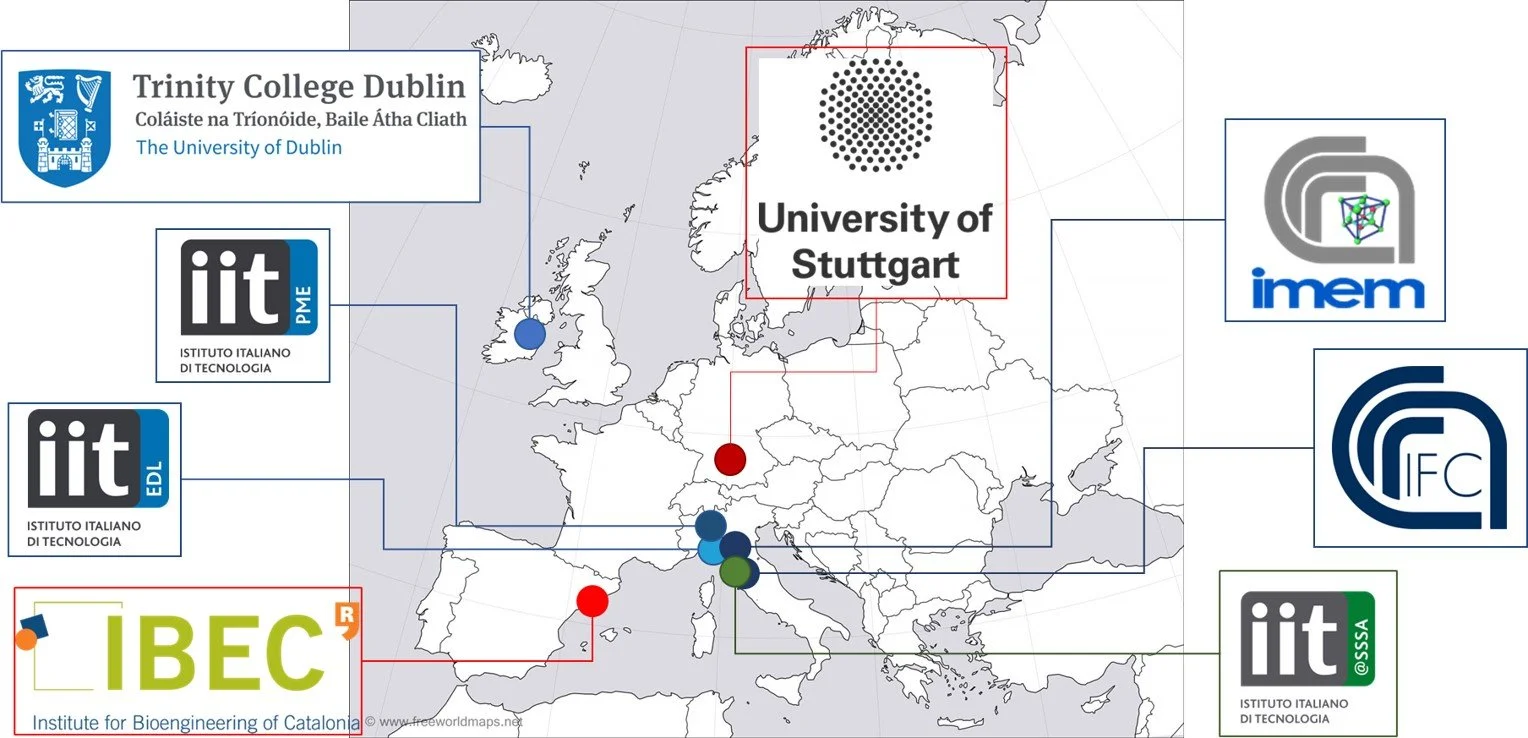
The IV-Lab consortium
